
What Can Cause A Positive THC Urine Test
Urine drug tests are commonly used to detect the presence of various substances, including THC (tetrahydrocannabinol), the psychoactive compound found in cannabis. While it is widely known that THC can lead to a positive result on a urine test, many factors can influence the outcome. For individuals undergoing drug screening, whether for employment, legal, or medical reasons, understanding these factors is key to interpreting the results accurately.
How THC Affects Urine Drug Tests
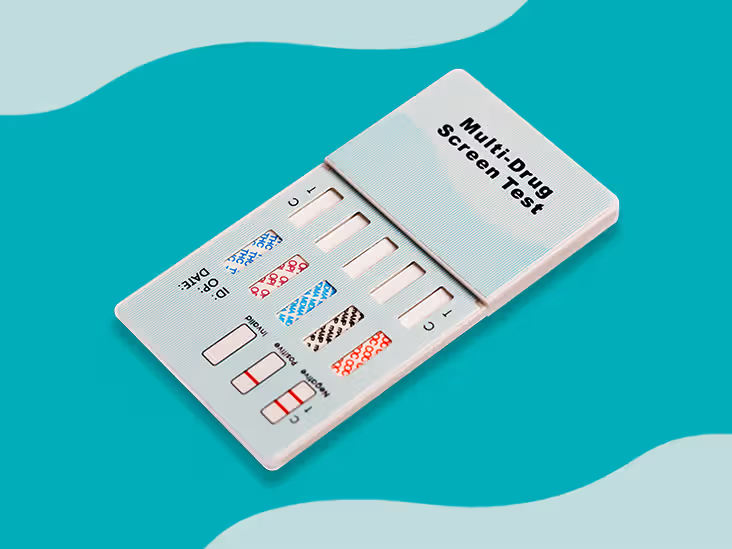
When cannabis is consumed, THC is absorbed into the bloodstream and metabolized by the liver, producing various metabolites. Some of these metabolites are then excreted in the urine. Urine drug tests are designed to detect THC-COOH, a specific metabolite of THC, which indicates recent cannabis use.
The length of time THC metabolites remain detectable in urine depends on several factors, including how often cannabis is used, the individual’s body composition, and the sensitivity of the test. For occasional users, THC may be detectable for up to three days, but for frequent or heavy users, it can stay in the system for weeks. Thus, it is important to consider the different factors that can affect the test outcome.
Frequency of Cannabis Use
The frequency with which cannabis is consumed plays a crucial role in determining the chances of a positive THC urine test. Those who use cannabis regularly or heavily are more likely to have detectable THC metabolites in their urine for longer periods than those who consume it occasionally or infrequently.
THC, being fat-soluble, accumulates in fat cells within the body over time, which slows down its elimination. As a result, individuals who use cannabis more frequently tend to have a greater buildup of metabolites, increasing the likelihood of a positive urine test.
The Impact of Consumption Method on THC Metabolism
The way cannabis is consumed can affect how THC is processed and how long it stays in the system. Smoking or vaping allows THC to enter the bloodstream quickly, leading to faster absorption and metabolism. On the other hand, edibles release THC into the bloodstream more slowly, and the body metabolizes it at a slower rate. Despite these differences, metabolites from both consumption methods can remain in the body for a long time, potentially resulting in a positive THC urine test.
Body Fat and Metabolism
THC is stored in fat cells, which means individuals with higher body fat percentages may experience a longer detection window for THC metabolites. Those with slower metabolic rates may also take longer to clear these metabolites. In contrast, people with higher muscle mass or faster metabolisms may eliminate THC more rapidly, reducing the likelihood of a positive test. However, body composition is only one factor that affects how THC is processed and eliminated from the body.
Hydration Levels and Water Intake
While hydration can impact the concentration of THC metabolites in urine, drinking excessive amounts of water to “flush” THC from the system is not a dependable method for passing a drug test. Although it may dilute the urine and make metabolites less detectable, this approach can raise suspicions during testing. Diluted urine may be considered an attempt to cheat, potentially leading to retesting or other consequences. Even with increased water intake, THC metabolites can still be detectable.
Influence of Medical Conditions and Medications
Certain medical conditions, such as liver disease, can affect the way THC is metabolized and eliminated from the body. Since the liver is responsible for breaking down THC, liver impairments may slow this process. Additionally, some medications may alter THC metabolism. For example, medications that affect liver enzymes can interfere with THC breakdown, leading to higher concentrations of metabolites in urine. It is essential for individuals undergoing drug testing to disclose any medical conditions or medications that might influence the results.
False Positives and Cross-Reactivity
False positives are another consideration in THC urine testing. Although rare, certain substances can cause cross-reactions that lead to inaccurate results. Some over-the-counter medications and antibiotics have been known to trigger false positives for THC. Furthermore, consuming hemp products containing trace amounts of THC may also result in a positive test, even if cannabis wasn’t intentionally consumed. To avoid this, individuals should check the ingredients of any hemp-based products they use.
Conclusion
Various factors, including cannabis use frequency, consumption method, body composition, medical conditions, and medications, can influence a THC urine test result. THC metabolites may remain detectable in the body for weeks, but the timing and likelihood of a positive test can differ for each individual. Those concerned about passing a drug test should understand the factors that can contribute to a positive result and take appropriate steps, such as abstaining from cannabis use well before testing.